Healthy Eating Hub

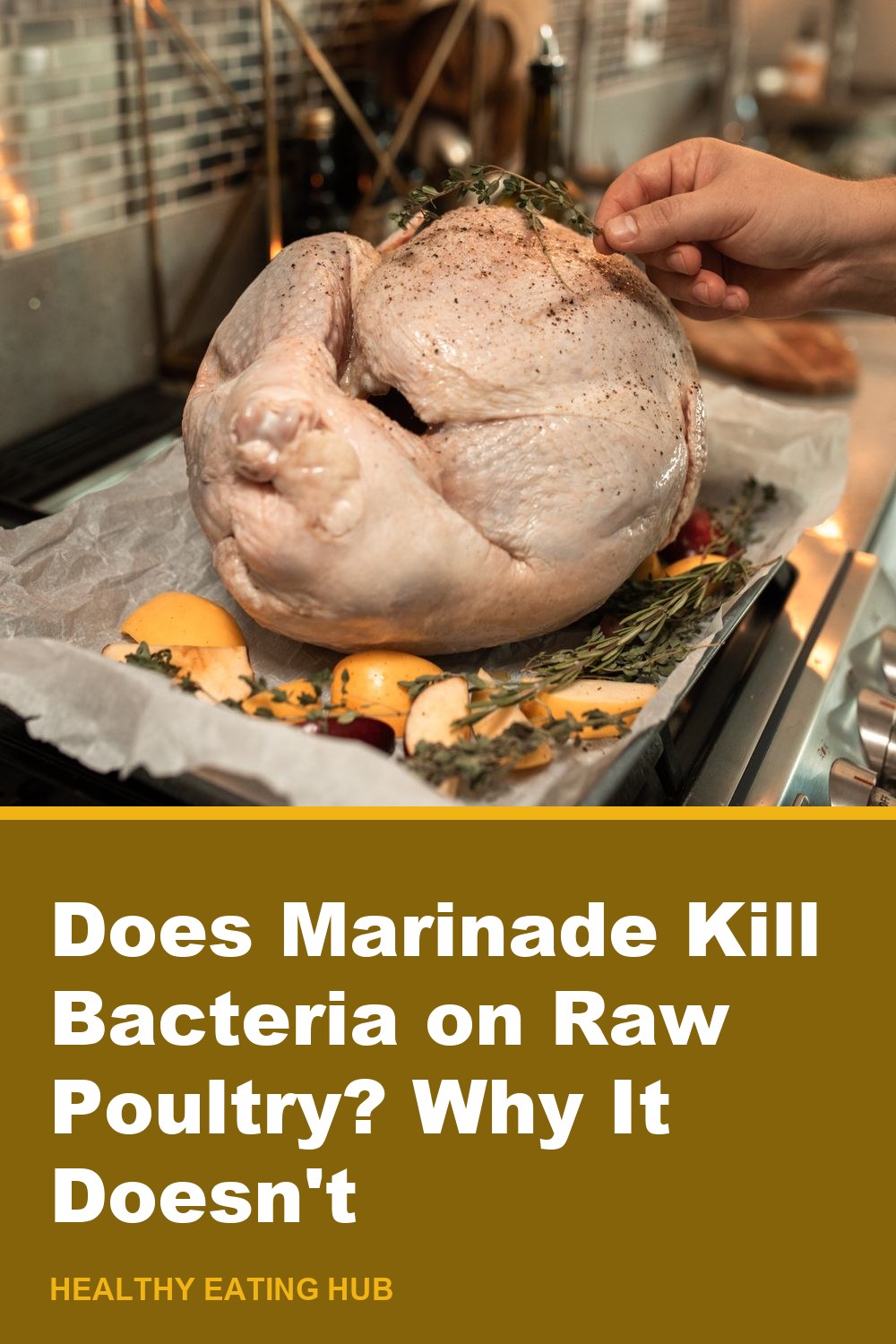

- Acidic marinades such as citrus, vinegar, wine and buttermilk do not make raw turkey safe, because the meat's own chemistry resists the acid.
- Raw turkey is only safe once the thickest part of the breast and the innermost part of the thigh reach 165°F on a thermometer.
- Treat any marinade that touched raw poultry like the raw meat itself: keep it away from ready-to-eat food and don't reuse it as a sauce.
No, a marinade does not kill the bacteria on raw poultry. Citrus, vinegar, wine and buttermilk add flavor and can tenderize, but they do not make a turkey or chicken safe to eat. Only cooking to a safe internal temperature does that, and for turkey the target is 165°F. This matters right now because holiday cooking season is here. Food Safety News (writer John Agbetsi) recently flagged the false comfort some cooks take from marinades and rubs as one of the risks that rarely makes the holiday headlines.
Why acid doesn't make raw turkey safe
It is easy to assume that anything sour enough to sting a paper cut must be hostile to germs. According to Food Safety News, turkey muscle works against that idea. Its meat, especially the white breast, has a high buffering capacity, which means it resists changes in pH.
That muscle is built for short bursts of intense activity that produce acid, so it is full of compounds that keep pH steady. They include structural muscle proteins, inorganic phosphates, and two small molecules called anserine and carnosine. When you pour in lemon juice or vinegar, these buffers soak up the incoming acid. The meat stays close to neutral, which is the range where Salmonella grows comfortably.
So the marinade may sit on the surface and change the taste, but it does not turn the meat into a place where bacteria can't live. Food Safety News puts it plainly: a marinade is a flavor step, not a safety step.
Salmonella on raw turkey is a real risk
This is not just a theoretical warning. Food Safety News points to a multidrug-resistant strain, Salmonella Reading, linked to raw turkey products from 2017 to 2019. It sickened hundreds of people across dozens of states, and investigators found it throughout the turkey supply chain, from live birds to raw pet food.
The buffering research described there is about turkey meat. The habits below are the ones I would follow for chicken too, since no marinade of any kind is a substitute for cooking.
What about salt, garlic and herbs?
Some seasonings do show antimicrobial properties in lab settings. Food Safety News names salt, garlic and thyme. But at the amounts anyone uses on a bird, they won't reliably kill Salmonella, which is notoriously good at surviving dry, salty conditions. Treat rubs and marinades as seasoning, not protection.
How to check your kitchen habits right now
Run through this list before the next raw poultry dinner. Most of it takes only a minute.
- Find your thermometer. You need a food thermometer that works. For turkey, Food Safety News says to check 165°F in the thickest part of the breast and the innermost part of the thigh. Do not judge by color, by time alone, or by how long the meat sat in a marinade.
- Check how you thaw. The CDC guidance cited by Food Safety News: in the fridge, allow about 24 hours for every 4 to 5 pounds. In cold water, use a sealed leakproof bag, submerge it, and change the water every 30 minutes. In the microwave, follow the manufacturer's instructions and cook the turkey right afterward. Never thaw on the counter. Our post on how to thaw turkey safely and roast it right walks through each method.
- Look at where your marinade lives. Marinate in a covered container or sealed bag on a low fridge shelf, so nothing can drip onto other foods.
- Clear the counter. Raw poultry and its packaging should not share a surface with salad ingredients, bread, or anything that goes on the plate uncooked.
- Separate your aromatics. Food Safety News advises keeping raw onions, garlic and herbs away from surfaces that held raw turkey, and taking care when they go raw into sides and garnishes.
What to do with the leftover marinade
The sources do not give a specific rule on reusing marinade, so this part is plain kitchen logic. Once a marinade has touched raw poultry, it has met whatever was on that meat. Acid doesn't clean the meat, so it can't be trusted to clean the liquid either.
Make it a habit to treat used marinade like raw poultry. Don't spoon it over cooked food, don't dip a brush in it at the table, and don't use it as a finishing sauce. If you want a sauce, set aside a clean portion of fresh marinade before the raw meat goes in, and keep that portion in a separate container.
Seasoning safely: add rubs and spices before cooking
Dried spices seem harmless because they are shelf-stable, but Food Safety News notes that Salmonella can survive in dry foods for months. A 2009 to 2010 outbreak linked to salami coated in contaminated black and red pepper sickened 272 people in 44 states and the District of Columbia.
A 2024 laboratory study in Applied and Environmental Microbiology, by Lin and colleagues, found that dry-surface Salmonella biofilms are much harder to kill than wet ones. Seventy percent isopropyl alcohol killed about 99.99 percent in a wet biofilm but only about 97 percent in a dry one. That is a processing-plant problem you can't see or wash away at home.
What you can do is apply dry rubs and spices before cooking, so the same heat that makes the turkey safe also treats the seasoning. Avoid sprinkling raw spice onto finished food.
Dated reminders from past outbreaks
- 2009 to 2010: Salmonella Montevideo infections tied to salami coated in contaminated pepper reached 272 people in 44 states and Washington, D.C.
- 2017 to 2019: Salmonella Reading linked to raw turkey products sickened hundreds of people across dozens of states.
- 2020: A Salmonella Newport outbreak tied to red onions sickened more than 1,100 people in 48 states, according to the CDC, plus more than 500 in Canada.
- 2024: Lin and colleagues showed dry-surface Salmonella biofilms resist sanitizer better than wet ones.
If someone feels unwell afterward
If anyone in your household becomes ill after a meal that included poultry, call your doctor or your child's pediatrician and mention what was eaten. Don't wait it out if it is a young child, or if you have a health condition that makes infections riskier. This article gives general food safety information, not medical advice.
How to prevent it next time
- Use the marinade for flavor and the thermometer for safety.
- Thaw in the fridge, in cold water or in the microwave, never on the counter.
- Keep raw poultry, its juices and its marinade away from anything served uncooked.
- Season with dry spices before the heat goes on.
- Store cooked leftovers promptly. Our guide on how long cooked chicken lasts in the fridge covers the next step, and the leftover turkey casserole is a good way to use up the bird.
Food Safety News sums up the holiday advice well: trust your thermometer, respect your spice rack, and don't count on the turkey's chemistry to help you.
FAQ
Does marinating chicken overnight make it safer?
No. A longer soak gives more time for flavor to build, but it does not replace cooking. The acid is absorbed by the meat's natural buffers, so the meat stays near neutral pH. The safety step is still cooking to the proper internal temperature.
Is it okay to rinse raw poultry first?
The sources here don't address rinsing, so I won't make a claim either way. What they do support is a thermometer, safe thawing and keeping raw poultry separated from ready-to-eat foods.
As an Amazon Associate I earn from qualifying purchases: if you buy through these links I may earn a small commission, at no extra cost to you. Each link opens a search on the Amazon store for your country.
Watch or listen to this episode
Sources
Photo: RDNE Stock project / Pexels

I'm an Italian creator who builds apps, games and websites. I run Healthy Eating Hub with the help of AI tools: every article starts from the sources linked above, and I check what goes out. I'm not a doctor, a lawyer or a financial adviser. Spotted a mistake or have an idea? Write to me.
Instagram @spartaco_94_My websiteWrite to meAbout this blogWritten by Ciro Irmici (Ciro Simone Irmici), with the help of AI tools. Ciro Irmici's website