Healthy Eating Hub

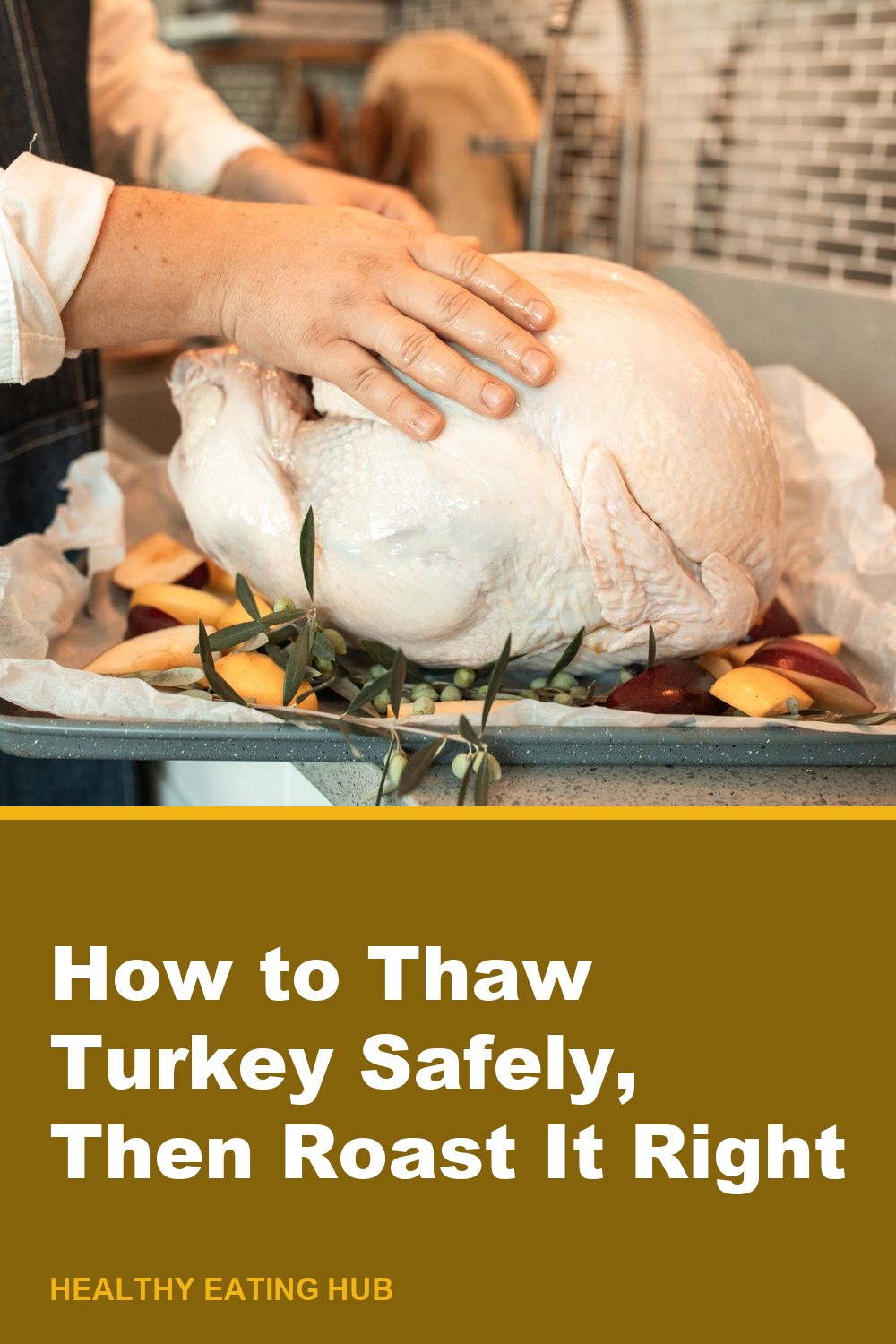

The safest way to thaw a turkey is in the refrigerator, or in a sealed bag in cold water if you are short on time. Never leave it on the counter. Once the bird is cooked, don't let it sit out at room temperature for more than two hours. With frozen whole turkeys on sale before the holidays, many cooks are looking up thawing first, and it is the right place to start. Budget Bytes, which tested its Thanksgiving turkey recipe in its Nashville Test Kitchen, begins its guide with safe thawing before anything else. This post is adapted from that recipe, with the thawing and food safety steps up front.
Two safe ways to thaw a turkey, and one to skip
A frozen turkey is safest when it stays cold the whole time it thaws. That is the idea behind both approved methods.
In the refrigerator. This is the steadiest method. Put the bird, still in its wrapper, on a tray or in a pan to catch drips, and set it on a low shelf so juices can't reach other food. It takes the longest, so it needs planning. The thawing time depends on the weight of your bird. Check the turkey's packaging or a food safety thawing chart for your exact weight, then count backward from the day you plan to roast.
In cold water. This is faster, but it needs more attention. Keep the turkey in a leakproof wrapper or bag, submerge it in cold tap water, and replace the water regularly so it stays cold. Plan to cook the turkey straight after thawing this way.
On the counter. Skip it. The outside of the bird warms up while the middle is still frozen, and that is exactly the situation food safety advice tries to avoid.
The two-hour rule for raw and cooked turkey
The two-hour rule is simple: perishable food should not stay at room temperature for more than two hours. In practice that means two things. First, don't leave a thawing turkey sitting out and call it "defrosting." Second, once dinner is over, get the leftovers into the fridge before the meal turns into an all-evening buffet. Carve the meat off the bones and pack it into shallow containers so it cools quickly.
Roast turkey, adapted from Budget Bytes
Below is my own rewrite of the Budget Bytes method. The original is a full guide with a printable Thanksgiving Day timetable, a tips section and an FAQ. Budget Bytes says the FAQ even covers what to do if your turkey is still frozen on the morning of the holiday, so read it before the big day. Amounts and the oven temperature for a whole bird are on the original recipe card, which gives weight-based guidelines. I haven't repeated numbers I can't back up here.
Ingredients
- 1 whole turkey, fully thawed using one of the methods above
- Salt, for the optional dry brine
- For the garlicky herb compound butter: butter, garlic, dried herbs and paprika
- For the seasoned oil: canola oil, black pepper, garlic powder, onion powder, paprika and ground mustard
- Aluminum foil, for tenting if the skin darkens too fast
- A thermometer: an electronic probe type for the oven, plus an instant-read one for the final checks
Method
- Thaw the turkey safely. Use the fridge or the cold water method above, and finish thawing before you season.
- Dry brine, if you have the time. Budget Bytes calls this optional but worthwhile. Salt helps the meat hold onto its own juices as it roasts. Leaving the bird uncovered in the fridge also dries the surface, which is what gives crisp skin. If you are short on time, skip the brine. The recipe still works, and the compound butter adds plenty of flavor.
- Mix the compound butter. Combine the butter, garlic, dried herbs and paprika.
- Season under the skin. Tuck the butter under the skin and gently massage it through the skin to spread it evenly. This keeps the breast meat juicy.
- Season over the skin. Stir together the oil and spices and dab a very thin layer over the outside, especially over the buttered areas, so you don't push the butter out of place.
- Roast with a probe thermometer. Turkey size and pan type change the cooking time, so go by internal temperature, not the clock. A probe lets you watch the temperature without opening the oven door.
- Don't baste. Opening the oven lets heat escape and lengthens the cooking time, and pouring juices over the bird adds moisture to skin you want dry and crisp. If the breast or drumsticks darken before the turkey is done, tent them loosely with foil.
- Pull the turkey early. Take it out at 157 to 160°F. Keep the thermometer away from bone, which can skew the reading. As the turkey rests, carryover heat brings it up to a safe 165°F.
- Check three places before carving. With an instant-read thermometer, test the thickest part of the breast, the innermost part of the thigh and the innermost part of the wing. All three must reach at least 165°F. If one doesn't, let the bird rest a little longer and test again.
- Save the pan juices. Budget Bytes suggests turning the drippings into homemade gravy.
Your thaw-and-serve checklist
- Pick a thawing method the moment you buy the turkey, and note the weight.
- Look up the thawing time for that weight on the packaging or a food safety chart, and mark the start day on your calendar.
- Keep the bird in a pan or tray so raw juices stay contained.
- Wash your hands, and anything the raw turkey touched, with hot soapy water before moving on to other food.
- Roast to temperature, not time, and confirm 165°F in all three spots.
- Put leftovers in the fridge within two hours of the turkey coming out.
Storing leftovers
Budget Bytes points out that a whole turkey is one of the most economical ways to feed a family, and it notes that leftover meat works well in soups, sandwiches and casseroles over the following days. To keep it safe, cool it fast. Slice it off the carcass, pack it in shallow containers and refrigerate within that two-hour window. For how long cooked poultry keeps in the fridge, see our post on how long cooked chicken lasts in the fridge. The same cooling habits apply to turkey.
One swap: turkey drumsticks for a smaller table
If you are feeding only a few people, or don't want a fridge full of leftovers, Budget Bytes suggests roasting drumsticks with the same compound butter under the skin and the same seasoned oil on the outside. Thaw them using the same safe methods first.
- Roast at 350°F for roughly 1 hour to 1 hour 15 minutes, flipping them halfway through.
- Pull them when the thickest part reaches 165°F. Budget Bytes says 175°F is ideal because the collagen in dark meat melts into tender meat.
- Plan on one leg per adult, or one leg per big eater, and one leg for every two young children.
Budget Bytes also mentions a roasted turkey breast as another option for small gatherings. Round out the meal with our guide to 4 ways to cook sweet potatoes. If you are watching sodium because of the dry brine, our home cook's guide to eating less salt and more potassium has simple ideas.
FAQ
Can I thaw a turkey on the counter if I'm in a hurry?
No. Use the cold water method instead. It is quicker than the fridge and keeps the bird cold. For a turkey that is still frozen on the morning you planned to cook, Budget Bytes has a section in its FAQ on rescuing it.
Is it safe if the turkey looks done but the thermometer says otherwise?
Trust the thermometer. Budget Bytes stresses that size and pan type change the cooking time, so internal temperature matters more than the clock or the look of the skin. Every one of the three spots should read at least 165°F.
As an Amazon Associate I earn from qualifying purchases: if you buy through these links I may earn a small commission, at no extra cost to you. Each link opens a search on the Amazon store for your country.
Watch or listen to this episode
Sources
Photo: RDNE Stock project / Pexels

I'm an Italian creator who builds apps, games and websites. I run Healthy Eating Hub with the help of AI tools: every article starts from the sources linked above, and I check what goes out. I'm not a doctor, a lawyer or a financial adviser. Spotted a mistake or have an idea? Write to me.
Instagram @spartaco_94_My websiteWrite to meAbout this blog