Healthy Eating Hub


There is no single number that fits every person, and the Australian regulator's figures are the best markers to work with. Supplements giving more than 10 mg of pyridoxine equivalent a day already need a nerve-symptom warning in Australia, and from June 2027 products with a recommended daily dose above 50 mg (up to 200 mg) will be pharmacist-only. The reason is that too much B6, especially stacked up over time, can damage nerves. Australia's Therapeutic Goods Administration (TGA) is now consulting on stronger warning labels, and that is a good prompt to add up the B6 in your own cupboard before you buy anything new.
What the Australian regulator is changing, and what it covers
According to NutraIngredients, the TGA is consulting on tougher labeling for listed medicines that contain vitamin B6. The worry is that high or cumulative intake can raise the risk of peripheral neuropathy. That is a condition that can cause severe, debilitating and sometimes long-lasting nerve damage.
The proposal covers three forms of the vitamin: pyridoxine hydrochloride, pyridoxal 5-phosphate, and pyridoxal 5-phosphate monohydrate. On a label, you may also see the shorthand "P-5-P". All of these count as vitamin B6, so a product can contain B6 without the words "vitamin B6" being the first thing you notice.
This is a consultation about supplements. It is not a warning about the foods in your kitchen, and nothing here suggests you need to change how you cook or shop for groceries.
The numbers that matter: a short timeline
Three dates and figures are on the public record, according to NutraIngredients:
- Right now: Australian B6 products providing more than 10 mg equivalent pyridoxine per day must tell people to stop taking them and see a healthcare practitioner if they notice tingling, burning or numbness.
- Nov. 25: the public consultation on three options for stronger warning statements closes.
- June 2027: B6 supplements with a recommended daily dose of over 50 mg and up to 200 mg become "pharmacist-only" (Schedule 3) products.
These are Australian rules, so they will not match the labels or limits where you live. I have not found a universal "safe ceiling" in the material behind this story, so I won't invent one. What the figures do show is how a regulator thinks about risk. Above 10 mg a day it wants a nerve warning on the pack, and at much higher doses it wants a pharmacist involved.
Why the total matters more than any one bottle
NutraIngredients points out that the issue is not limited to high-dose B6 tablets. People can pick up B6 from several products at once without realizing it. It lists multivitamins, magnesium products, energy formulas, stress supplements and sports-nutrition products as examples.
Picture a normal morning. A multivitamin with breakfast, a magnesium capsule for sleep, an energy powder before a workout. Each label looks modest, but the milligrams add up. That is why the sensible question is not "is this one product too high?" but "what is my combined daily B6?"
It is the same logic as asking whether more protein is really better. More of a good thing is not automatically better, and the total across everything you take is what counts.
How to check your cupboard today
This takes about ten minutes and a pen. It is a good job for a quiet evening.
- Gather everything you swallow or stir into a drink. Include multivitamins, magnesium, sleep or stress blends, energy drinks and powders, sports products, and anything your partner or older relatives keep in the same cupboard.
- Read the supplement facts panel and the ingredient list. Look for "vitamin B6", "pyridoxine", "pyridoxine hydrochloride", "pyridoxal 5-phosphate" and "P-5-P".
- Write down the milligrams per serving, then multiply by how many servings you take each day. If the label gives a range, use the higher number.
- Add the products together. That is your combined daily B6 from supplements.
- Compare it with the markers above. Australia's current warning threshold is 10 mg a day, and the pharmacist-only band starts above 50 mg a day. If your total is well above the first marker, take your list to a pharmacist or doctor rather than guessing.
- Look for overlap. If two products both contain B6 and you only need one, ask a pharmacist or dietitian which is worth keeping.
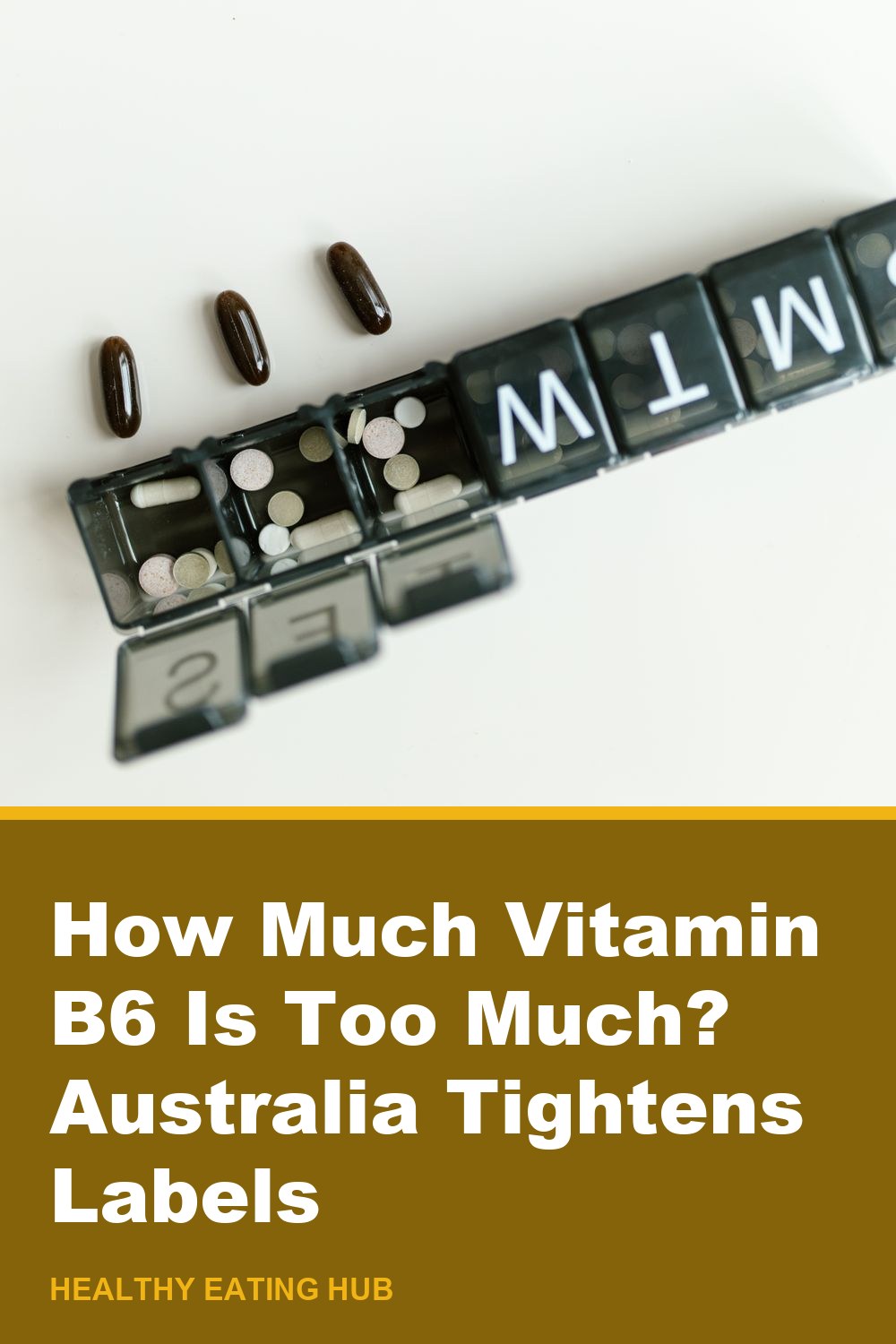
A weekly pill organizer helps here, because it puts everything you actually take in one place where you can see it. Keep the original labels or a photo of them so your pharmacist can read the exact amounts.
Symptoms to take seriously and when to speak to a doctor
The warning that already appears on Australian B6 products names three sensations: tingling, burning and numbness. The instruction is to stop taking the product and see a healthcare practitioner if you notice them. That is a sensible rule to follow wherever you live.
- Do not wait to see whether it passes if you have unexplained tingling, burning or numbness and you take B6 in any form.
- Bring every supplement you take, with the labels, so the doctor can see the full picture.
- Do not self-diagnose. Many things can cause tingling, and only a professional can tell you the cause.
If you are pregnant, take regular medicines, or have a health condition, check with your doctor or dietitian before taking or stopping any supplement. The same goes for children: ask a pediatrician before giving them anything beyond what they normally eat.
Keeping B6 in check from now on
A few habits make it much harder to overshoot by accident:
- Add one product at a time. Before buying a new multivitamin, magnesium blend or energy formula, check its B6 line first and compare it with your running total.
- Don't assume "natural" or "calming" means low. Stress and energy blends are on the list of products that can contain B6.
- Keep a simple list on the fridge door. Product, B6 amount, servings per day. Update it when something changes.
- Be wary of supplement hype online. Our post on misleading social media health content is a useful reminder to check claims against the label.
- Get comfortable reading labels. The habits in our guide to reading labels on kids' foods carry over well to supplement panels.
It also helps that buyers want clearer labels. A McKinsey report cited by NutraIngredients found clear ingredient labeling was among the top five considerations when people buy vitamins, minerals and supplements. A regulator pushing for stronger B6 warnings fits that trend.
FAQ
Do the Australian B6 rules apply where I live?
No. The consultation and the pharmacist-only change are Australian. The advice to add up your B6 and to know the alternate names on labels is useful anywhere, and a local pharmacist can tell you what the rules and labels look like in your country.
Is P-5-P a different vitamin from B6?
No. Pyridoxal 5-phosphate, often shortened to P-5-P, is one of the forms of vitamin B6 named in the TGA proposal. When you tally your total, count it alongside pyridoxine.
The key point to take away: no regulator figure replaces a conversation with your own pharmacist or doctor, but writing down every B6 milligram you take is a simple first step, and it costs nothing.
As an Amazon Associate I earn from qualifying purchases: if you buy through these links I may earn a small commission, at no extra cost to you. Each link opens a search on the Amazon store for your country.
Watch or listen to this episode
Sources
Photo: RDNE Stock project / Pexels

I'm an Italian creator who builds apps, games and websites. I run Healthy Eating Hub with the help of AI tools: every article starts from the sources linked above, and I check what goes out. I'm not a doctor, a lawyer or a financial adviser. Spotted a mistake or have an idea? Write to me.
Instagram @spartaco_94_My websiteWrite to meAbout this blog