Healthy Eating Hub

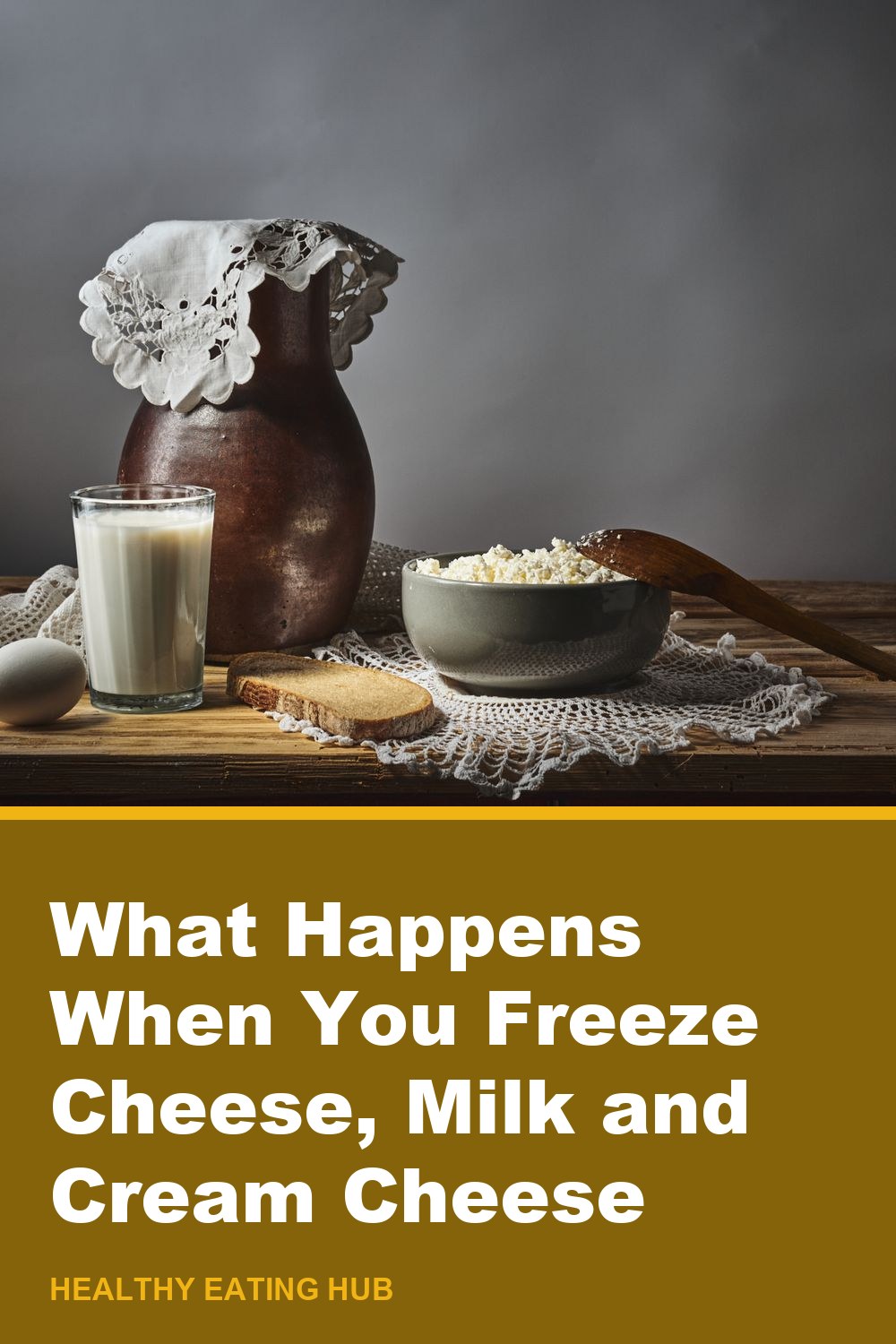

You bought the big block of cheddar because it was cheaper. Now half of it is sitting in the fridge with a use-by date coming up, next to a carton of milk you won't finish before your trip and a tub of cream cheese you opened for one bagel. Binning any of it feels like throwing money away.
The short answer: yes, you can freeze cheese, milk and cream cheese, and they stay safe to eat. What changes is texture. Hard cheeses turn a little crumbly, milk can separate, and cream cheese goes grainy. So frozen dairy is usually best used in cooking rather than eaten as-is. Below is why that happens, what freezes well, and how to thaw it without making things worse.
Why does freezing change the texture of dairy?
Dairy is mostly water held inside a network of milk proteins, with tiny droplets of fat spread through it. Milk is roughly 87% water. Hard cheese like cheddar is around a third water; soft cheeses and cream cheese hold much more.
When that water freezes, it forms ice crystals. Crystals are sharp and take up more space than liquid water, so they push the protein network apart and squeeze fat droplets together. When the ice melts, the water doesn't slip neatly back into place. Some of it leaks out, and the structure that made the food smooth or springy has been stretched.
Think of a wool jumper washed too hot and then stretched to dry. It's still a jumper and still keeps you warm, but it never quite sits the same way again. Frozen-and-thawed dairy is like that: still food, still fine, just a slightly different shape.
The more water a product has, the more ice forms and the bigger the change. That one rule predicts most of what follows.
Which cheeses freeze well, and which don't?
Use this as a quick guide. Freezer times are for best quality at -18°C (0°F); they vary with packaging and how fresh the cheese was when it went in.
| Dairy | Freezes well? | Texture after thawing | Best use | Rough freezer time |
|---|---|---|---|---|
| Hard cheese (cheddar, gouda, emmental) | Yes | Crumblier, harder to slice thin | Grating, sauces, bakes, toasties | About 3–6 months |
| Parmesan-style hard cheese | Yes | Barely changes when grated | Pasta, soups, risotto | About 3–6 months |
| Low-moisture mozzarella (the block or bag kind) | Yes, best grated | Slightly drier, still melts | Pizza, lasagne | About 3 months |
| Fresh mozzarella, burrata | Poorly | Watery, rubbery | Cooked dishes only | About 1 month |
| Brie, camembert | Poorly | Weepy, loses creaminess | Baked or melted | About 1–2 months |
| Ricotta, cottage cheese | Poorly | Grainy, separates | Lasagne, pancakes, baking | About 1–2 months |
| Cream cheese | With texture loss | Grainy, crumbly | Baking, sauces, dips you'll blend | About 2 months |
| Milk | Yes | May separate, slightly watery | Cooking, porridge, smoothies, drinking after shaking | About 1–3 months |
Blue cheeses sit in the middle: they crumble more, which hardly matters if you crumble them onto salads or into sauces anyway.
How do you freeze cheese properly?
- Portion first. Cut blocks into pieces of 100–250 g, the amount you'd use in one dish. Thawing a whole kilo for one recipe wastes the point.
- Grate if you'll cook with it. Grated cheese freezes fast, so crystals stay smaller. Toss with a teaspoon of flour or cornflour per 200 g to stop clumping, then freeze flat in a bag.
- Wrap tightly. Press out as much air as you can. Air causes freezer burn, those dry, pale patches that taste stale.
- Label it. Name and date. In three months you won't remember what's in the bag.
Grated cheese can go straight from freezer to pan or pizza with no thawing.
Can you freeze milk, and how do you thaw it?
Yes. Milk expands as it freezes, so leave at least 2–3 cm of space at the top of the bottle or container, or pour off a little first. A full glass bottle can crack, so plastic is safer.
Thaw milk in the fridge, never on the counter. A 1-litre bottle usually takes around 24 hours, a 2-litre one up to 48. Once thawed, the fat may have separated into yellowish flecks. Shake it hard for 20–30 seconds or give it a quick blitz with a stick blender, and it'll mostly come back together.
Use thawed milk within 2–3 days, and treat it like milk that's been open that long. Whole milk separates more than skimmed because it has more fat to clump.
What about cream cheese?
Cream cheese is around half water and set into a soft, smooth gel. Freezing breaks that gel, so it thaws grainy and a bit wet. It won't spread nicely on a bagel again.
It works well, though, anywhere it gets beaten or heated: cheesecake, frosting (beat it well first), pasta sauces, creamy soups, dips you'll blend. Freeze it in its sealed foil packet or in small portions, thaw in the fridge for about 8–12 hours, then stir or whisk until smooth. Pour off any liquid that has pooled on top, or stir it back in if you're cooking.
What the research says
Food safety agencies agree on the basics. The UK Food Standards Agency's guidance on freezing and defrosting recommends freezing food before its use-by date, keeping your fridge at 5°C or below, and defrosting in the fridge so it stays cold the whole time.
Freezing pauses bacteria rather than killing them. The Better Health Channel's food safety advice explains that bacteria become active again as food warms, which is why thawed food should be handled like fresh food and used promptly.
Freezing is also a reasonable way to keep dairy in your week without waste. The NHS Eat Well guidance includes milk, cheese and other dairy or fortified alternatives as part of a balanced diet, and freezing doesn't remove their protein or calcium; the change is in texture, not in what the food is made of.
For general information on safe storage at home, MedlinePlus is a reliable plain-language reference. If you're pregnant, cooking for a young child or someone with a weakened immune system, ask your doctor or a registered dietitian which soft cheeses are suitable at all, frozen or not.
Common mistakes
- Thawing on the counter. It feels quicker, but the outside sits in the warm zone where bacteria multiply while the middle is still frozen. Fridge thawing is the safe route.
- Freezing dairy that's already near the end. Freezing holds food in the condition it went in. Milk that was about to turn will be about to turn again once it thaws, with less time left.
- Refreezing after thawing. Each round adds more ice damage, and the time spent thawed adds up. Thaw only what you'll use, which is exactly why portioning first pays off.
This article is general cooking and food-safety information, not medical or nutrition advice. If you have a health condition, allergies or special dietary needs, ask your doctor or a registered dietitian.
Watch or listen to this episode

I'm an Italian creator who builds apps, games and websites. I run Healthy Eating Hub with the help of AI tools: every article starts from the sources linked above, and I check what goes out. I'm not a doctor, a lawyer or a financial adviser. Spotted a mistake or have an idea? Write to me.
Instagram @spartaco_94_My websiteWrite to meAbout this blog