Healthy Eating Hub


A fall trip to a pumpkin patch is easy to treat as harmless fun, but two recent E. coli outbreaks tied to farm visits are a reminder to build a few habits into the outing. In one case, health officials traced an outbreak to a baby goat in a petting zoo. In the other, they never found the source, and one person linked to the outbreak has died. The steps that lower your family's risk are simple: wash hands after animal contact, keep little hands and food away from animals, and know which symptoms need a call to a doctor.
What happened at two farms
According to Food Safety News, San Luis Obispo County Public Health confirmed on Nov. 10 that one person tied to the E. coli O157 outbreak linked to Brookshire Farms has died. The county gave no age or other details, and it has not said whether that person was among the confirmed cases, the suspect cases or the children who developed kidney complications.
The county's Nov. 6 closing release counted five people with laboratory-confirmed Shiga toxin-producing E. coli O157. All five visited the farm on Oct. 17 or 18. Ten more people who visited between Oct. 16 and 26 and became ill were counted as suspect cases. An Oct. 30 release reported that three children had developed hemolytic uremic syndrome (HUS), a form of kidney failure.
Genetic testing on three of the confirmed patients' samples matched each other and did not closely match anything in national databases. The county said this strongly suggests a common and unique source. Water, food and other samples from the farm did not turn up E. coli O157, though other E. coli strains were found in some. Edible corn cups, pumpkins, hay and non-potable water sources were common to the people who became ill, but none was identified as the source. No farm animals or petting zoo were open to the public.
Health Officer Dr. Christy Mulkerin said a negative environmental result is not unexpected, because contamination is often temporary and hard to detect.
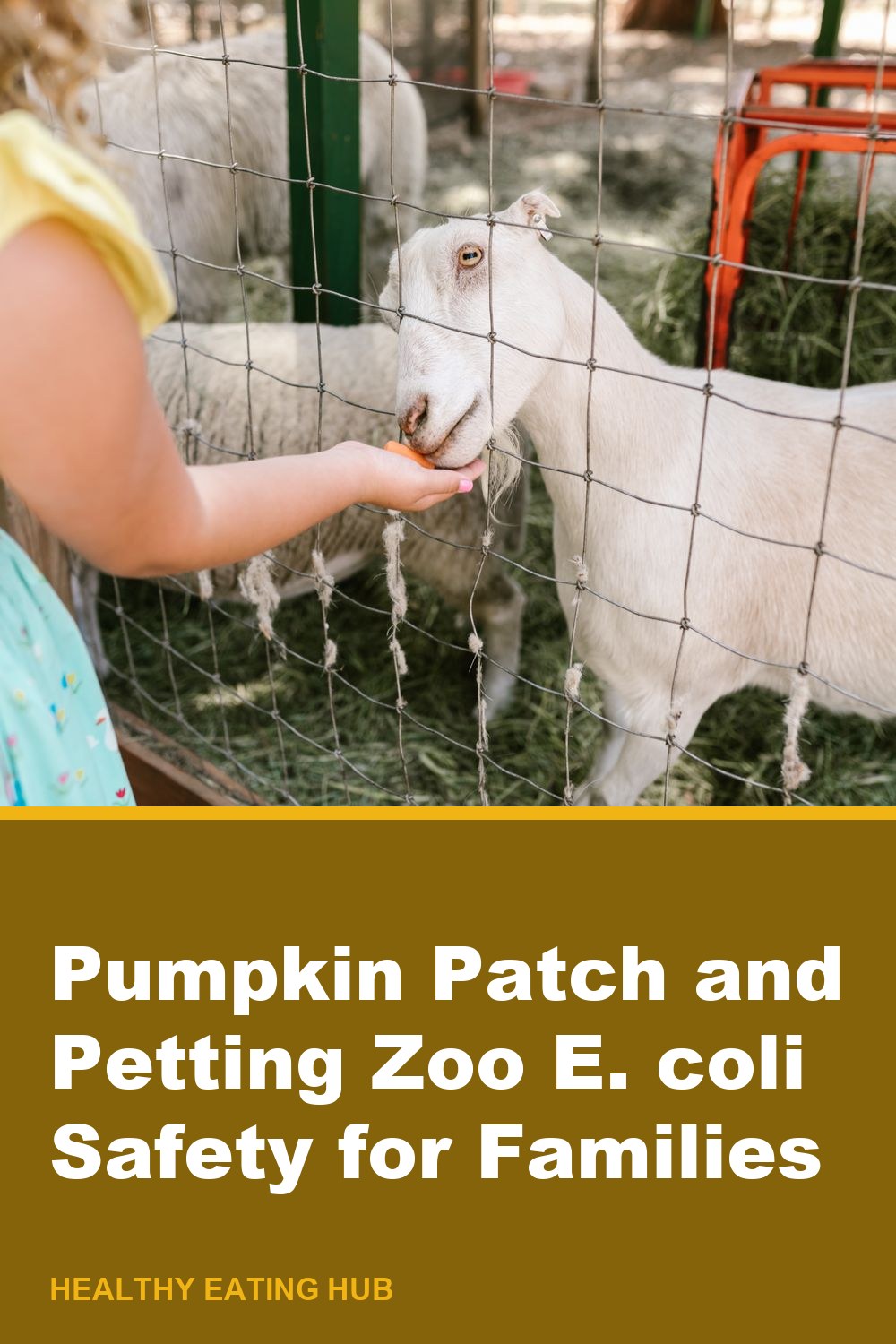
The second outbreak, also reported by Food Safety News, involved Bengtson's Pumpkin Farm in Homer Glen. The Will County Health Department said DNA testing found that a baby goat in the petting zoo carried the same strain of E. coli that infected visitors. Several animals tested positive for Shiga toxin-producing E. coli, but only one goat's bacteria were closely related to those in confirmed human cases. Seven patients have been confirmed so far. Officials also reviewed the farm's food service operations and found no concerns.
What the two outbreaks tell families
Sean Conners, Director of Environmental Health at the Will County Health Department, pointed out that E. coli bacteria are commonly found in animals. A petting zoo animal can look healthy and still be a source of germs for people who touch it or its surroundings.
The Bengtson's farm had done what many farms do. Signs at the petting zoo entrance and exit reminded visitors to wash their hands, avoid eating around animals and leave strollers and wagons outside. Handwashing stations were available at the exit. Signs and sinks only help if families use them, so the habits below are worth planning before you arrive.
The Brookshire case shows the other side. When no animals were open to the public and no source was found, it was hard to say which part of the farm to avoid. That is a reason to treat the whole outing with some care, not only the animal pen. Washing hands before eating anywhere on a farm is a reasonable precaution even when no animals are in sight.
What to do: a family checklist
None of this requires special equipment. It takes a plan and a few reminders for the kids. This checklist applies the advice posted at the Bengtson's petting zoo, plus common-sense steps for the rest of the outing.
| Moment | What to do | Why it matters |
|---|---|---|
| Before you go | Decide where you will wash hands and where you will eat. Look for handwashing stations on the farm's website or when you arrive. | Handwashing stations were at the exit of the Bengtson's petting zoo; knowing where they are makes it easier to use them. |
| Entering the animal area | Leave strollers and wagons outside. Keep snacks, bottles and pacifiers in the bag or the car. | Posted signs at Bengtson's asked visitors to leave strollers and wagons outside and avoid eating around animals. |
| While petting animals | Remind children not to put hands, toys or fingers in their mouths or touch their faces. Stay close to young children. | E. coli is commonly found in animals, and a single baby goat was linked to the Will County outbreak. |
| Leaving the animal area | Wash everyone's hands, adults included, before touching food, drinks or phones. | Hands are how germs travel from animal areas to mouths. |
| Before snacks or lunch | Wash hands again, even if you did not visit animals, and eat away from pens and hay. | At Brookshire, no animals were open, and pumpkins, hay, corn cups and water were common to those who became ill, though none was named as the source. |
| After you get home | Note the date and place of your visit. If anyone becomes ill, tell the doctor about the farm trip. | Health officials asked people who visited and became sick to report symptoms, and doctors need exposure details because specific tests are required. |
Children under five deserve extra attention. According to the information Food Safety News cited from the Centers for Disease Control and Prevention (CDC), serious kidney complications are most common in children younger than five and in older adults. They also occur in people with weakened immune systems. If your household includes someone in these groups, ask a doctor how to approach farm visits.
Symptoms that need prompt medical attention
E. coli infection looks different from person to person. Often it includes severe stomach cramps and diarrhea that is frequently bloody, and some people also have a fever. The CDC says most people recover within five to seven days.
Anyone with symptoms of E. coli infection should seek medical attention and mention the possible exposure. Specific tests are needed to diagnose it, and the infection can resemble other illnesses.
About 5 to 10 percent of people diagnosed develop HUS, a potentially life-threatening kidney failure complication. Warning signs include:
- fever
- abdominal pain
- feeling very tired
- urinating less often
- small unexplained bruises or bleeding
- pale skin
People with these symptoms should seek emergency medical care immediately. HUS usually means hospitalization, since it can lead to further problems such as high blood pressure, chronic kidney disease, brain damage and neurologic problems. Many people recover within a few weeks, but some are left with permanent injuries, and some die.
This is general information, not a diagnosis. If you are worried about a child or an older relative after a farm visit, call a doctor.
Keeping the fun in the outing
You do not need to skip the hayride or the goats. A few minutes of planning can make a real difference: pack snacks for eating after handwashing, make the handwashing station the first stop after the animal pen, and give children a simple rule such as "hands stay away from faces until we wash." Making it a routine is easier than making it a lecture.
FAQ
Can you get E. coli from a petting zoo?
Yes. In the Will County case, the health department found that a baby goat at a pumpkin farm petting zoo carried the same E. coli strain that infected visitors. E. coli bacteria are commonly found in animals, which is why officials stress handwashing and keeping food away from animal areas.
What are the first signs of E. coli infection?
According to the CDC, symptoms often include severe stomach cramps and diarrhea, which is often bloody, and sometimes a fever. Most people recover in five to seven days. Anyone with these symptoms should see a doctor and mention any recent farm or animal exposure.
When is E. coli an emergency?
Seek emergency care right away for signs of hemolytic uremic syndrome: fever, abdominal pain, unusual tiredness, urinating less often, small unexplained bruises or bleeding, or pale skin. The condition is most common in children under five, older adults and people with weakened immune systems.
Watch or listen to this episode
Sources
- Food Safety News (recalls & outbreaks): One death reported in relation to pumpkin patch outbreak in California
- Food Safety News (recalls & outbreaks): Baby goat found to be cause of E. coli outbreak
Photo: RDNE Stock project / Pexels

I'm an Italian creator who builds apps, games and websites. I run Healthy Eating Hub with the help of AI tools: every article starts from the sources linked above, and I check what goes out. I'm not a doctor, a lawyer or a financial adviser. Spotted a mistake or have an idea? Write to me.
Instagram @spartaco_94_My websiteWrite to meAbout this blog