Healthy Eating Hub

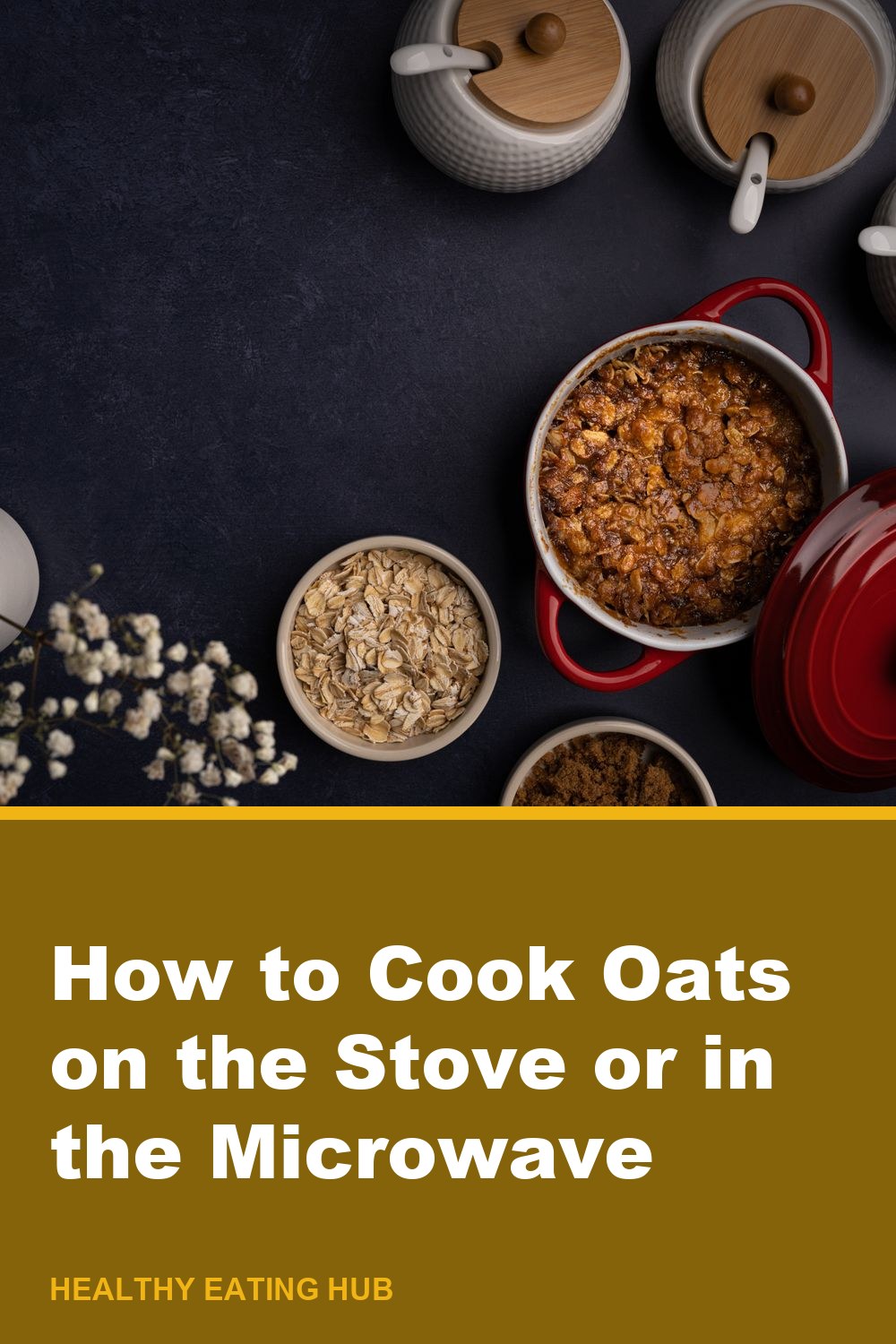

You want a hot bowl of porridge before work. You don't want a pan welded with burnt milk or a microwave coated in foam. You also don't want to guess how much liquid goes in every single morning.
Here's the short answer. For one bowl, use 40–50 g rolled oats (about ½ cup) to 250–300 ml liquid, water, milk or a mix. On the stove, simmer gently for 4–5 minutes, stirring now and then. In the microwave, use a big bowl and cook for 2–3 minutes at full power in short bursts, stirring between them. Rest it for 1 minute. That's it.
The rest of this guide covers which oats need which timing, how milk changes things, and how to stop porridge turning into glue or climbing out of the bowl.
1. Pick your oats
The oat you buy decides the cooking time. Check the packet before you start.
- Rolled oats (old-fashioned, jumbo or porridge oats): steamed and flattened. The everyday choice. Stove 4–5 minutes, microwave 2–3 minutes.
- Quick or instant oats: rolled thinner or cut smaller. Stove 1–2 minutes, microwave about 1–1½ minutes. They go soft and pasty fast.
- Steel-cut or pinhead oats: chopped whole groats. Chewy and nutty. Stove 20–30 minutes. Not a great microwave job for a busy morning.
All three are whole grains. The NHS eating guidance on wholegrain starchy foods counts oats among the higher-fibre options worth choosing. Jumbo oats sit between rolled and steel-cut: add a minute or two to the rolled-oat timing.
2. Measure the oats and liquid
Use a scale or the same mug every day. Consistency beats precision. Volume ratio for rolled oats is roughly 1 part oats to 2 parts liquid. Go up to 1:2½ if you like it loose.
| Oat type | Oats (1 bowl) | Liquid | Stove time | Microwave time |
|---|---|---|---|---|
| Rolled | 40–50 g (½ cup) | 250–300 ml | 4–5 min | 2–3 min |
| Quick/instant | 40 g (½ cup) | 200–250 ml | 1–2 min | 1–1½ min |
| Jumbo | 50 g (½ cup) | 300 ml | 5–7 min | 3–4 min |
| Steel-cut | 40 g (¼ cup) | 250–300 ml | 20–30 min | Not recommended |
Microwave times assume roughly 800–1000 W. Ovens vary, so treat the first bowl as a test and note what works.
Water, milk or both?
- Water: cheapest, lightest, tastes most of oats. Cooks fastest and almost never catches.
- Milk: creamier and richer. Also foams, boils over and scorches more easily. Any dairy or plant milk works; oat and soy milk thicken a bit more.
- Half and half: the easy middle ground. Creamy enough, far less drama.
Add a small pinch of salt whatever you use. It doesn't make porridge salty. It makes it taste of something.
3. Cook it on the stove
Use a small, heavy-based pan. Thin pans scorch milk in seconds. Follow this sequence:
- Put 250–300 ml liquid and a pinch of salt in the pan.
- Heat on medium until small bubbles appear at the edge. With water, you can let it come to a simmer. With milk, stop at steaming.
- Stir in 40–50 g rolled oats.
- Turn the heat down to low or medium-low. You want a lazy bubble, not a rolling boil.
- Cook for 4–5 minutes. Stir every 30–60 seconds, scraping the bottom and corners.
- Take it off the heat when it's slightly looser than you want. It thickens as it sits.
- Cover and rest for 1 minute, then serve.
For steel-cut oats, bring 250–300 ml liquid to a simmer, add 40 g oats, then cook on low for 20–30 minutes with the lid ajar. Stir every 5 minutes and add a splash of water if it gets thick before the oats are tender.
To stop a boil-over on the stove: keep the heat low once the oats go in. Never walk away from milk. If foam starts rising, lift the pan off the heat for 10 seconds and stir. It drops straight back.
4. Or cook it in the microwave
The bowl matters more than the timing. Use one that holds at least three times the volume of oats and liquid. For one portion, that's a bowl of around 750 ml–1 litre. A cereal bowl is too small.
- Put 40–50 g rolled oats, 250 ml liquid and a pinch of salt in the large bowl. Stir.
- Microwave uncovered on full power for 1 minute.
- Stir well, scraping the sides.
- Microwave for another 1 minute. Stir again.
- If it still looks runny, add 20–30 second bursts until the oats are soft and the texture looks right. Most bowls need 2–3 minutes in total.
- Rest for 1 minute. The bowl and the porridge will be very hot, so use a cloth.
With milk, work in shorter bursts: 1 minute, then 30 seconds at a time. Milk foams up quickly. Some cooks drop to 50–70% power for 3–4 minutes instead; it's slower but rarely boils over.
Quick oats: 40 g oats, 200 ml liquid, 1 minute, stir, then 15–30 seconds if needed.
5. Loosen, rest and top
Porridge keeps thickening for a few minutes off the heat. Look at it after the rest. Too thick? Stir in 1–3 tablespoons of hot water or milk. Too thin? Leave it another minute.
Then add toppings. Keep it simple and cheap:
- Half a sliced banana or a handful of frozen berries (stir frozen ones in before the last minute of cooking).
- A tablespoon of nut butter or seeds for texture.
- A grated apple and a pinch of cinnamon.
- A teaspoon of honey, jam or brown sugar if you like it sweet.
If you're interested in why whole grains are worth eating regularly, the Harvard Nutrition Source overview of whole grains and healthy eating is a clear, practical read.
6. Store and reheat leftovers
Making a double batch on the stove saves time on a second morning. Handle it like any cooked leftover:
- Cool it and get it into the fridge within about 2 hours of cooking.
- Store covered and eat within 1–2 days.
- Reheat with a splash of water or milk, stirring, until it's steaming hot all the way through.
- Reheat only once.
The Food Standards Agency's guidance on leftovers and food hygiene covers cooling and reheating in more detail.
A note on gluten: oats don't naturally contain gluten, but they're often processed alongside wheat. If you have coeliac disease or a gluten intolerance, ask your doctor or a registered dietitian before eating oats, and look for products labelled gluten-free.
Common mistakes
1. Cooking on high heat the whole time
A hard boil makes milk foam over, scorches the bottom of the pan and breaks the oats down into paste. Bring the liquid up on medium, then drop to low once the oats are in. In the microwave, use bursts, not one long 3-minute blast.
2. Overcooking and over-stirring
This is what turns porridge gluey. Oats release starch as they cook and as you stir. Stirring now and then keeps them from sticking. Beating them constantly for 10 minutes gives you wallpaper paste. Stop cooking when it's a little loose, and let the rest do the thickening. Quick oats need half the time of rolled oats, so don't swap them in without cutting the timing.
3. Using a bowl or pan that's too small
Oats and milk rise as they heat. A cereal bowl in the microwave or a tiny milk pan almost guarantees a spill. Use a bowl three times the volume of what's in it, and a pan with at least 5 cm of space above the liquid.
This article is general cooking and food-safety information, not medical or nutrition advice. If you have a health condition, allergies or special dietary needs, ask your doctor or a registered dietitian.
Watch or listen to this episode

I'm an Italian creator who builds apps, games and websites. I run Healthy Eating Hub with the help of AI tools: every article starts from the sources linked above, and I check what goes out. I'm not a doctor, a lawyer or a financial adviser. Spotted a mistake or have an idea? Write to me.
Instagram @spartaco_94_My websiteWrite to meAbout this blog