Healthy Eating Hub

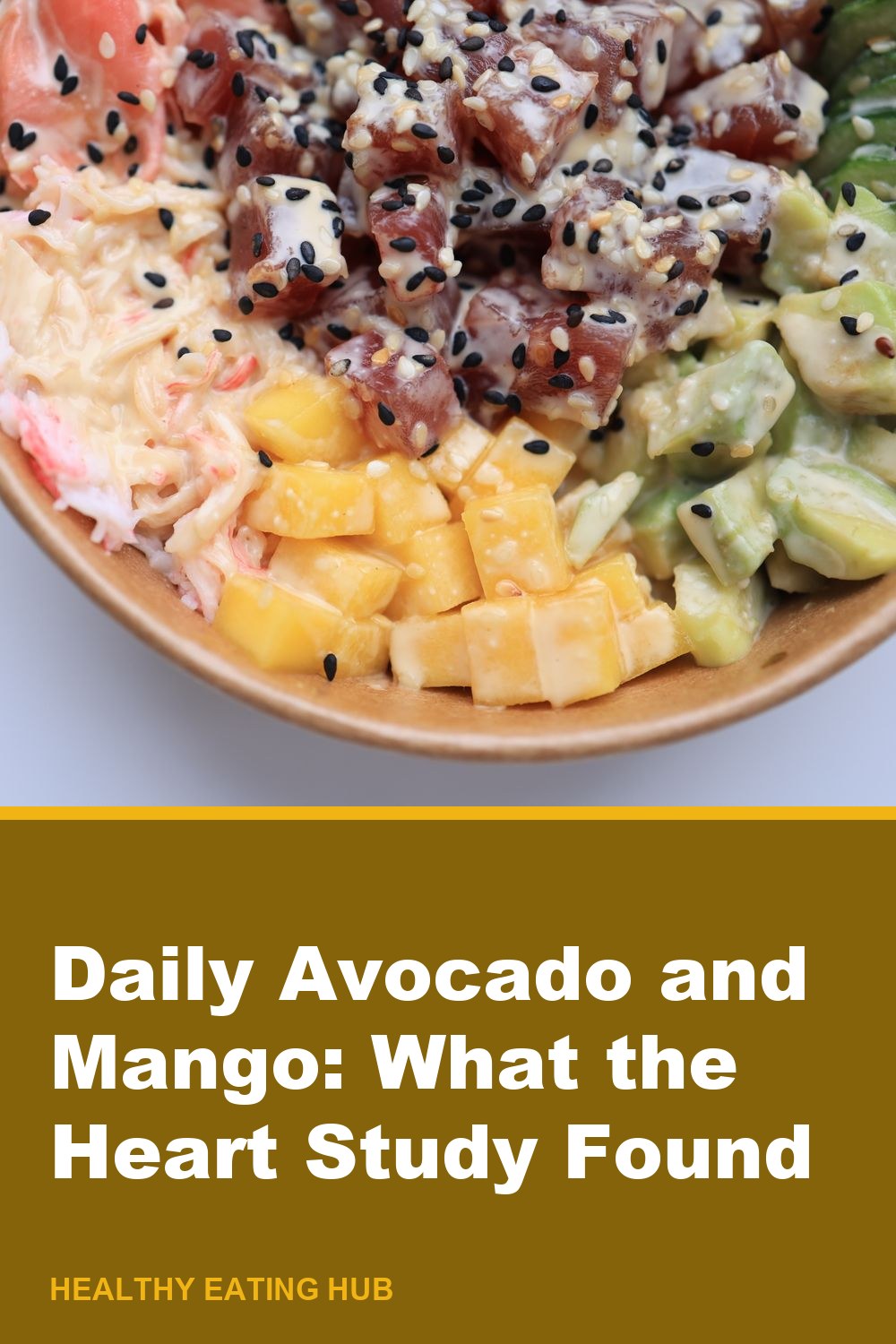

Adults with prediabetes who ate one medium Hass avocado and one cup of fresh mango every day for eight weeks showed better blood vessel function than a comparison group, without gaining weight. That is the finding of a study published in the Journal of the American Heart Association, as reported by ScienceDaily. Both fruits are easy to find and easy to cook with, so the result is worth a look. It comes from a single small trial, though, and it does not prove that these foods protect the heart.
What the researchers did
According to ScienceDaily, a team at Illinois Institute of Technology (Illinois Tech) studied 82 adults aged 25 to 60. All had prediabetes and were classified as having overweight or obesity. Prediabetes means blood sugar is raised but has not yet reached the level of type 2 diabetes. ScienceDaily cites a figure of one in three Americans, or 98 million people.
One group followed an Avocado-Mango diet for eight weeks, with one medium Hass avocado and one cup of fresh mango each day. A comparison group ate a similar diet in which the fruits were swapped for carbohydrate-based foods with the same number of calories.
What changed, and what did not
The clearest difference was in how well blood vessels widen as blood flows through them. Researchers measured this with flow-mediated dilation (FMD), a common test of endothelial function. The endothelium is the thin layer of cells lining the inside of blood vessels. In the avocado-and-mango group, FMD rose to 6.7%. In the comparison group it fell to 4.6%.
Blood pressure also differed, especially in men. Men in the comparison group saw central blood pressure rise by an average of 5 mmHg. Men eating avocado and mango saw a fall of about 1.9 mmHg. The researchers said such differences could be clinically meaningful if they last over time.
Participants eating the fruits also took in more fiber, vitamin C and monounsaturated fat. The report also mentions improvements in one kidney marker, estimated glomerular filtration rate (eGFR), which shows how well the kidneys filter waste from the blood.
Not everything moved. Cholesterol, blood sugar and markers of inflammation stayed largely unchanged compared with the comparison group. Body weight and total calorie intake did not change significantly either.
What each fruit brings to the plate
ScienceDaily lists nutrient figures per serving for each fruit. Note that these servings are smaller than the daily amounts used in the study.
| Fruit | Serving size used for the figures | Nutrients listed |
|---|---|---|
| Mango | ¾ cup | Fiber 2 g (7% DV); vitamin C 50% DV |
| Avocado | 50 g (one third of a medium avocado) | Fiber 3 g (11% DV); unsaturated fat 6 g; potassium 250 mg (6% DV) |
| Study daily amount | 1 medium Hass avocado + 1 cup fresh mango | Eaten for eight weeks by the Avocado-Mango group |
In other words, the study's daily avocado equals roughly three of the servings in the table. The report notes that unsaturated fats can help lower LDL cholesterol when they replace less healthy fats. It also says potassium is involved in regulating blood pressure, and that fiber may help with blood sugar, weight and heart health.
How strong is this evidence?
It is encouraging, but it has clear limits.
- It is one small study. Eighty-two people over eight weeks cannot tell us what happens over years, or in people without prediabetes.
- The blood pressure result was strongest in men. ScienceDaily highlights the change in male participants, so don't assume everyone would see the same effect.
- The two fruits were tested together. The report states the study did not establish whether eating both gives greater benefits than eating either one alone.
- Several markers did not improve. Cholesterol, blood sugar and inflammation markers were largely unchanged.
Britt Burton-Freeman, PhD, the principal investigator and a professor at Illinois Tech, described the work as reinforcing “food-first strategies” for lowering cardiovascular risk. She said small, nutrient-dense additions like these fruits may support heart health “without the need for strict rules or major dietary overhauls.”
What this means for you
You don't need to copy the study exactly. Its lesson is that two whole fruits, eaten regularly, may be worth a place in a varied diet. Here is how to use that in a family kitchen.
- Swap rather than stack. The comparison group ate carbohydrate foods with equal calories, and the fruit group did not take in more calories overall. Let avocado and mango replace something, such as a refined-carb side or a sugary snack, rather than being added on top of everything else.
- Start with dishes you already make. ScienceDaily suggests salads, smoothies and grain bowls. Diced mango adds sweetness to a savory bowl, and avocado adds a creamy texture.
- Try the recipe ideas named in the report. These are Mango Avocado Tuna Ceviche and an Avocado and Mango Topper. ScienceDaily points to Mango.org and LoveOneToday.com for more recipes. If you use them, read the nutrition information with your own eating pattern in mind.
- Think in servings. If a whole avocado a day is more than your household will eat, a third of one is the serving size behind the nutrient figures above. A smaller habit is still a reasonable place to start.
- Keep the rest of the plate in view. The study measured specific markers over eight weeks. It did not test whether two fruits can offset the rest of a diet.
A simple week of ideas
If you want to try the habit, a loose plan helps. Use the fruits at different meals so neither gets boring.
- Breakfast: blend mango into a smoothie, or top toast with sliced avocado.
- Lunch: build a grain bowl with avocado slices and a few cubes of mango for sweetness.
- Dinner: spoon an avocado-and-mango topper over grilled fish or chicken, or make a ceviche-style dish like the one the report mentions.
- Snack: eat a cup of fresh mango on its own.
These are serving ideas, not a prescribed plan. Adjust the amounts to your appetite and budget.
If you have prediabetes or high blood pressure
The study focused on adults with prediabetes, but it does not offer treatment advice. It also found no significant change in blood sugar. If you have prediabetes, diabetes, kidney problems or high blood pressure, ask your doctor or a registered dietitian how fruit and fats fit into your own plan before changing your diet.
FAQ
Does eating avocado and mango every day lower blood pressure?
In this eight-week study, men who ate both fruits daily saw central blood pressure fall by about 1.9 mmHg. Men in the comparison group saw it rise by an average of 5 mmHg. The study was small, and it cannot show that the fruits will lower blood pressure for everyone.
Do avocado and mango cause weight gain?
Participants in this study did not gain significant weight or eat more total calories. The fruits replaced other carbohydrate foods in the diet rather than being added on top. Results at home depend on your overall eating.
Do I need to eat both fruits together to get the benefit?
We don't know. According to ScienceDaily, the study did not determine whether eating the two fruits together is better than eating either one alone. Both are nutrient-rich, and you can enjoy them separately or together.
Sources
- ScienceDaily – Nutrition: Scientists discover surprising heart benefits of eating avocado and mango every day
- ScienceDaily – Diet & Weight Loss: Scientists discover surprising heart benefits of eating avocado and mango every day
Photo: Valeria Boltneva / Pexels

I'm an Italian creator who builds apps, games and websites. I run Healthy Eating Hub with the help of AI tools: every article starts from the sources linked above, and I check what goes out. I'm not a doctor, a lawyer or a financial adviser. Spotted a mistake or have an idea? Write to me.
Instagram @spartaco_94_My websiteWrite to meAbout this blog