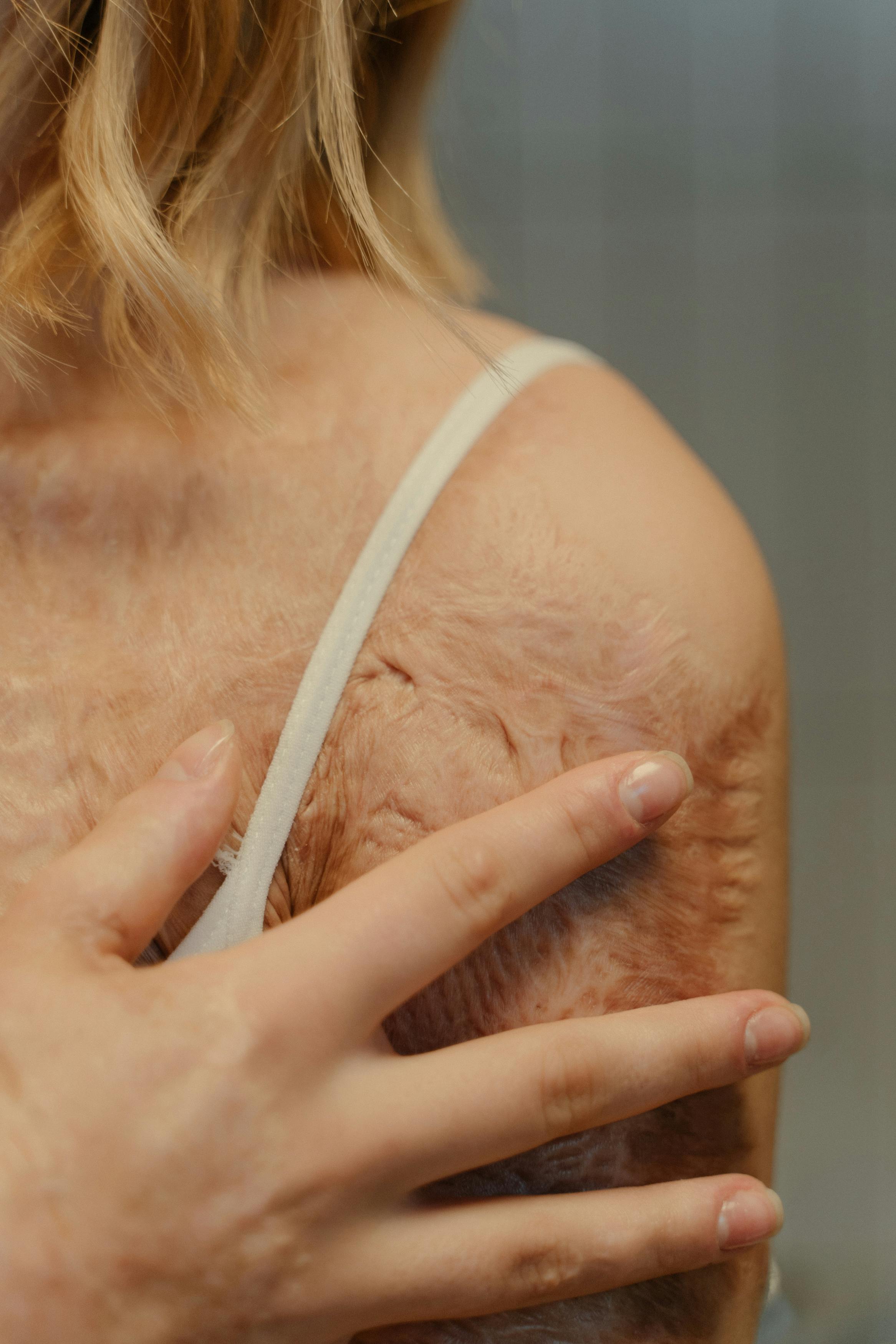
"Hidradenitis Suppurativa: Unveiling a Hidden Chronic Skin Condition Impacting Millions"
About Hidradenitis Suppurativa
Hidradenitis suppurativa is a chronic inflammatory skin condition that often goes undiagnosed for years, leaving many patients to suffer painfully and self-consciously without solutions. Research suggests that as many as 1 in 100 people may be affected—an estimated 3.5 million Americans—though the exact prevalence remains uncertain. The name means “the inflammation of a sweat gland (Hidradenitis)” and “containing or associated with pus (Suppurativa).”
“Hidradenitis suppurativa is a condition that causes painful nodules (lumps), abscesses, and formation of draining tunnels and scars in places like the underarms, groin, buttocks, and under the breast,” says Christopher Sayed, MD, board-certified dermatologist and director of the University of North Carolina at Chapel Hill’s hidradenitis suppurativa clinic. Dr. Sayed notes that symptoms most often appear when patients are teenagers or in their twenties and persist for decades, though hidradenitis suppurativa can develop at any age.
Though hidradenitis suppurativa (often referred to as “HS” by people who are familiar with it) can look like a skin infection, Dr. Sayed explains that it behaves more like autoimmune conditions such as rheumatoid arthritis or Crohn’s disease. “In the case of HS, the inflammation starts around hair follicles so it sometimes looks like infected or ingrown hairs early on, but over time gets more severe and out of control.”
The biggest known risk factor for hidradenitis suppurativa is family history. Dr. Sayed explains that there isn’t one single gene responsible, so it isn’t as straightforward as a 50/50 chance that a person either will inherit it, or not. However, the condition is “about 20 times more common for people that have a first-degree relative with it,” Dr. Sayed says, adding, “We also know it’s about three times more common in women than men in the U.S. and Europe, and it’s about three times more common in Black people than other races in the U.S.”
Early signs and symptoms of hidradenitis suppurativa may include:
- Painful bumps resembling ingrown hairs in areas such as the underarms, groin, buttocks, or under the breasts
- Lesions often larger than one centimeter and tender to the touch
- Recurring flare-ups in the same spots that last for months
- Cysts or blackheads forming in common hidradenitis suppurativa-affected regions
- Lack of improvement with standard antibiotics for skin infections
Because there is no specific test for hidradenitis suppurativa, doctors rely on clinical criteria: the presence of classic lesions, in typical locations, recurring for months at a time.
Hidradenitis Suppurativa Treatment Options
If you suspect you may have hidradenitis suppurative, it’s important to see your doctor for an evaluation. According to Dr. Sayed, treatment often begins with familiar options such as antibiotics, birth control pills, or spironolactone. These medications work by targeting hormonal pathways, much like some acne treatments do.
However, once scarring and tunneling develop, dermatologists usually turn to different medications. “We have a low threshold to start medications like adalimumab (Humira), secukinumab (Cosentyx), and bimekizumab (Bimzelx) to help stop the progression and get the condition under control more quickly,” he says.
The newest therapy, bimekizumab (Bimzelx), was approved for moderate to severe HS within the past year and has already delivered promising results. “It shares similarities with Cosentyx but blocks the inflammatory pathway more completely, resulting in better response rates and deeper improvements for some patients,” Dr. Sayed explains. “For areas of skin where scarring and tunnels don’t fully heal with medication, surgery may be necessary to remove the damaged tissue.”
Future Research and Developments
“Despite this progress, many patients still seek alternative treatments, as not everyone responds to current options and it’s difficult to predict which therapy will work best for each individual,” Dr. Sayed says.
More than a dozen hidradenitis suppurativa clinical trials are underway, including phase 3 trials for JAK inhibitors, IL-1 antagonists, and IL-17 antagonists. These emerging therapies may further improve outcomes or provide alternatives for people who don’t respond well to existing options. “I expect several new approved options to become available within the next two to three years,” Dr. Sayed concludes.
Ahead, Imani, a 27-year-old woman from New Haven, Connecticut, shares her journey to hidradenitis supparativa diagnosis, the treatments that are helping her find relief, and her message of hope for others living with HS.
“How I Knew I Had Hidradenitis Suppurativa: A Young Woman’s Story”
By Imani Futrell, as told to Dr. Patricia Varacallo, DO
The First Signs and Diagnosis of Hidradenitis Suppurativa
I first noticed something was wrong when I was 11 years old. Painful, boil-like bumps appeared in my groin area, and they ached so much that even sitting a certain way or having clothes rub against them made the pain worse.
When I showed my mom, we assumed it must be a hygiene issue. Like so many people in the hidradenitis suppurativa community, I didn’t realize these early signs could be part of a chronic medical condition. We didn’t give it too much attention until the symptoms worsened as I got older.
By the time I was 15, things had escalated. After shaving my armpits, I started developing large boils and abscesses, including one stubborn bump that just kept coming back. Eventually, the symptoms spread to other areas, like my bottom, and the pain became impossible to ignore. That’s when my mom and I decided it was time to see doctors.
Looking back, I consider myself fortunate to have received a diagnosis within six months—so many people wait seven to 10 years to finally learn they have HS. At first, I just wanted to believe it would all go away. I wasn’t ready to accept that this was something I’d be living with for the long term.
My doctor prescribed antibiotics and creams, which helped somewhat, but the unpredictable nature of HS—showing up anywhere a hair follicle exists—was incredibly difficult to manage.
Coming to Terms with Hidradenitis Suppurativa
In the beginning, we misunderstood my symptoms. We’d assumed I just wasn’t cleaning well enough, and that left me feeling uncertain and self-conscious for years. I love self-care and always felt like I was being thorough in how well I stayed clean.
It wasn’t until the flare-ups got worse and more frequent that we realized this was something more serious. That misunderstanding really stuck with me, and it’s why I believe education about HS is so important. It helps people recognize the signs sooner and prevents years of suffering in silence.
When I got my diagnosis, I felt a mix of surprise and relief. It was shocking to discover that the boils were symptoms of a recurring, chronic disease. But I was also relieved to finally have a name for my condition and explanation for what I’d been dealing with for years…and to know that it was not a hygiene issue. Finally knowing what it was and realizing there were steps I could take to manage my symptoms gave me a sense of hope and a way forward.
Living with a Chronic Condition
Living with HS is about so much more than just the physical symptoms you can see. The pain is severe enough to disrupt my sleep, and I often carry extra clothes and medical supplies to handle drainage and wound care wherever I go. I’ve had to adjust my exercise routines daily, depending on how my body feels.
Emotionally, the unpredictability weighs on me. I’m always worried about when the next flare-up might strike, and that anxiety can be exhausting. But over time, I’ve learned resilience and developed a positive mindset to keep going.
I used to feel really self-conscious about my condition. For a long time, I wore dark clothes or wouldn’t show much skin so that my bandages wouldn’t be noticed. Dating and intimacy come with added concerns, and even travel plans had to be carefully thought through. Finding the HS community on social media has been a turning point for me. Knowing there are others who understand what I’m going through has been a lifeline, and it inspired me to become an advocate. I want to help reduce stigma, raise awareness, and remind people that we’re not alone.
Despite the challenges, I’ve still been able to do things I love. New treatments and holistic strategies have helped me manage symptoms in a way that lets me enjoy life again. This past summer, I even took my first solo trip to Florida, and it turned out to be the trip of a lifetime.
Finding a Treatment That Works
Over time, I’ve learned what tends to
Comments
Post a Comment